
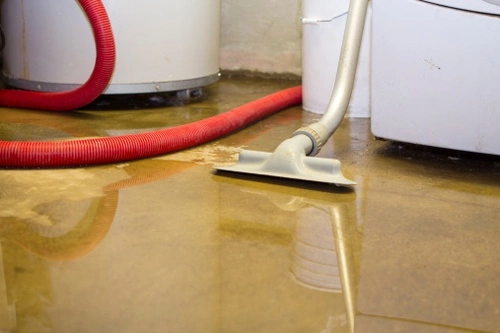
With the recent rains, an upcoming El Nino winter, and rising high tides, property owners and public agencies in California are experiencing and preparing for property damage associated with floods, mudslides, high tides, and other water intrusion events. When that damage occurs, the next question is typically who is responsible – is it simply an extreme weather event or natural disaster, is there insurance coverage, or is a public agency responsible? The concept of inverse condemnation has become a new theme in these types of matters. But when does inverse condemnation apply ...

We recently reported on the California Legislature’s passage of Senate Bill 1153, noting that the Bill was waiting for Governor Newsom’s approval. That approval has now occurred, and the Bill is official.
This is a huge legislative victory for water suppliers in California, as the Bill clarifies that public water systems have no duty to be designed, constructed, or maintained for wildfire defense or suppression—and that the inability to maintain water supply or pressure during a wildfire is not a substantial cause of wildfire damages. Together, these authorities provide an ...

California water providers are one step closer to receiving important statutory protection against inverse condemnation claims arising from catastrophic wildfires. Senate Bill 1153 has passed both houses of the California Legislature and is headed to Governor Newsom. If signed, the legislation would provide important guidance regarding what public water systems can—and cannot—reasonably be expected to do during a wildfire.
For those following California inverse condemnation law, the bill is particularly significant because it builds upon both prior legislation ...

Article 1, Section 17 of the Texas Constitution:
“[n]o person’s property shall be taken, damaged, or destroyed for or applied to public use without adequate compensation being made…”
This blog will provide a brief overview of inverse condemnation, what is needed to bring an inverse condemnation claim, applicable statute of limitations, and what remedies are available in Texas.
Before we jump in and discuss inverse condemnation, it is important to understand the foundation of eminent domain and the difference between Statutory and Inverse Condemnation.
What is Eminent ...

The contours of inverse condemnation liability are often tested by creative California plaintiff’s lawyers. In an opinion earlier this year, one Northern California Federal Court dealt with a novel lawsuit in which the Vichy Springs Resort asserted Federal and state-based inverse condemnation theories against the City of Ukiah arising out the City’s shooting range used to train its police officers (Vichy Springs Resort v. Ukiah).
According to the complaint, guests have been visiting the resort for almost two centuries to take in the curative powers of the carbonated warm ...
Eminent Domain Report is a one-stop resource for everything new and noteworthy in eminent domain. We cover all aspects of eminent domain, including condemnation, inverse condemnation and regulatory takings. We also keep track of current cases, project announcements, budget issues, legislative reform efforts and report on all major eminent domain conferences and seminars in the United States.
Stay Connected
 RSS Feed
Categories
- Administration
- Appraisal
- Arizona
- California
- California
- CLIMATE CHANGE
- CONGRESS
- Construction
- Court Decisions
- Energy & Utilities
- Environmental Law
- EPA
- Events
- FAQs
- Goodwill
- GOVERNMENT ADMINISTRATION
- Inverse Condemnation & Regulatory Takings
- Land Use Planning
- Lawsuit
- Legal Developments
- Nevada
- New Legislation
- Policy Shifts
- Possession
- Projects
- Public Agency Law
- Public Agency Law
- Public Policy
- Publications
- Real Estate and Property Rights
- Redevelopment
- Regulatory Reform and Proposed Rules
- Right to Take
- Right-of-Way
- Risk Management
- Seminars
- Speaking Engagements and Presentations
- Texas
- trial
- Utility Regulation
- Valuation
- Videos
- Washington State
- Water
- Water Law
- Wildfire Management
