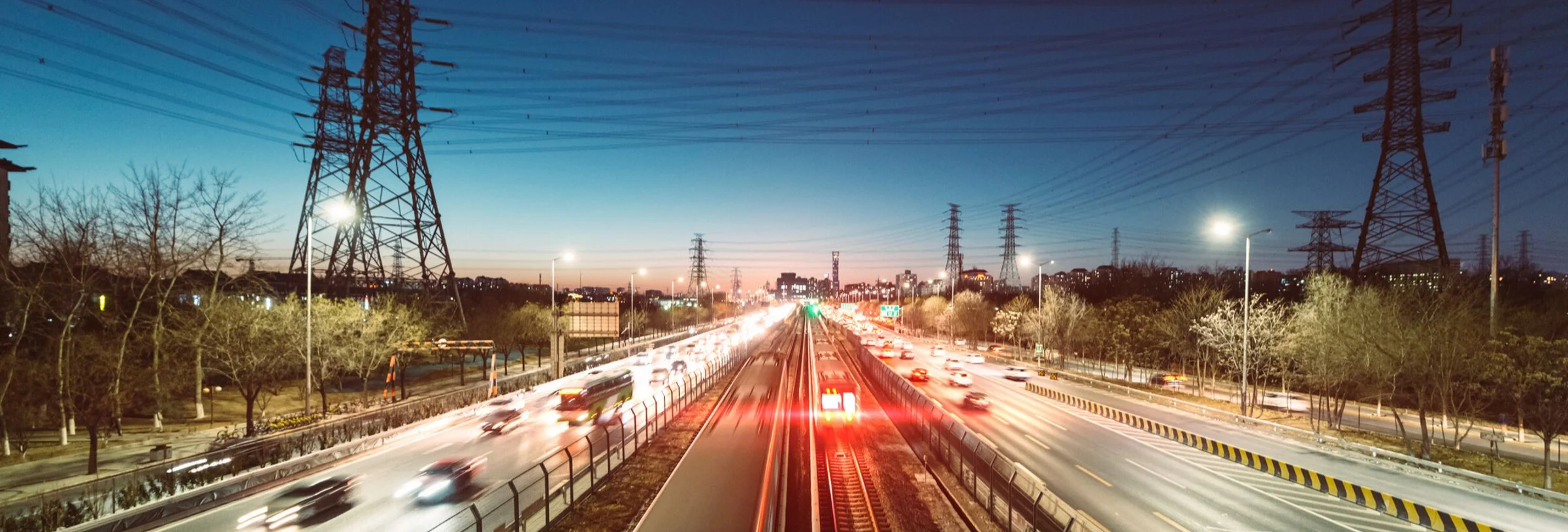

Like most of the United States, California is experiencing significant growth in data centers and other large users of electricity. The California Energy Commission reports that California already has more than 200 active data centers and expects their electricity demand to increase substantially over the coming years. To address this heightened demand and the delays in delivering sufficient energy to power these facilities, last week the California Independent System Operator approved a new process designed to accelerate connections for these large customers.
Most of the attention understandably focuses on where those data centers are located. But there is another question that receives far less attention: where will all the infrastructure needed to deliver that electricity go? Data centers can require new substations, transmission lines, distribution facilities, and related infrastructure. That means easements, access, utility relocations, acquisitions, and, in some cases, eminent domain. For utilities and public agencies, the challenge is not simply identifying an engineering solution. It is identifying a solution that can be built on a realistic schedule. A proposed transmission alignment may look straightforward on a map but become significantly more complicated when it crosses developed commercial property, environmentally sensitive land or parcels with conflicting future development plans. For a data-center developer, obtaining land-use approvals and financing the facility may be only part of the equation. If sufficient electrical service requires substantial off-site infrastructure, the timing and real estate requirements for that infrastructure can become critical to the project schedule.
This is where early coordination matters. The utility, developer, engineers and right-of-way professionals should be asking the real estate questions while alternatives still exist—not after an alignment has effectively been locked in. What property rights are actually needed? Are there title or access problems? Can the facilities co-exist with existing or planned development? Are there particularly difficult parcels along the route? Could a relatively small design change materially reduce acquisition costs or property impacts? These problems are much easier to solve while a project still has flexibility.
California’s growing demand for electricity is usually discussed as an energy issue. Increasingly, it is also a real estate and right-of-way issue. And as California builds the infrastructure needed to power AI, data centers, electrification and economic growth, finding the power may be only half the challenge. The other half may be finding a place to put the infrastructure that delivers it.

 Partner
Brad Kuhn is a California real estate lawyer whose practice focuses on complex real estate disputes, eminent domain, inverse condemnation, land use and major infrastructure and development projects. He represents public ...
Eminent Domain Report is a one-stop resource for everything new and noteworthy in eminent domain. We cover all aspects of eminent domain, including condemnation, inverse condemnation and regulatory takings. We also keep track of current cases, project announcements, budget issues, legislative reform efforts and report on all major eminent domain conferences and seminars in the United States.
Stay Connected
 RSS Feed
Categories
- Administration
- Appraisal
- Arizona
- California
- California
- CLIMATE CHANGE
- CONGRESS
- Construction
- Court Decisions
- Energy & Utilities
- Environmental Law
- EPA
- Events
- FAQs
- Goodwill
- GOVERNMENT ADMINISTRATION
- Inverse Condemnation & Regulatory Takings
- Land Use Planning
- Lawsuit
- Legal Developments
- Nevada
- New Legislation
- Policy Shifts
- Possession
- Projects
- Public Agency Law
- Public Agency Law
- Public Policy
- Publications
- Real Estate and Property Rights
- Redevelopment
- Regulatory Reform and Proposed Rules
- Right to Take
- Right-of-Way
- Risk Management
- Seminars
- Speaking Engagements and Presentations
- Texas
- trial
- Utility Regulation
- Valuation
- Videos
- Washington State
- Water
- Water Law
- Wildfire Management
