
A seasonal blog from the condemning authority’s side of the table.
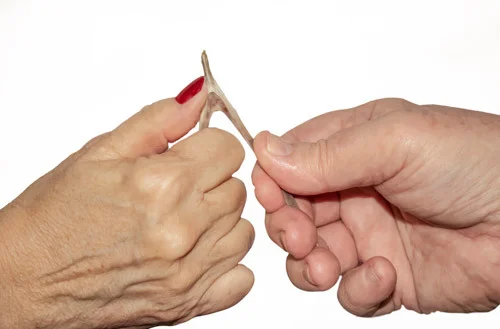
After every Thanksgiving, two people grab the ends of a dried turkey bone, close their eyes and pull. Whoever snaps off the bigger half gets the wish. It is a good tradition for a holiday table but a terrible way to approach a condemnation case because if you pull too hard for the bigger piece, you could end up with the short end.
The person who yanks hardest for the big half usually ends up with nothing but a snapped-off nub. Similarly, an appraiser who overreaches for the biggest possible number risks losing all credibility — with the court and the jury.
The carving knife, the kitchen and the table: Rule 702
Before any appraisal makes it to the table, it has to get past the gatekeeper. In Texas, that gatekeeper is Rule 702 and it carves with two blades. The expert must be qualified and the opinion must be both relevant to the issues and built on a reliable foundation.
Reliable means grounded in accepted methods —not subjective belief “wishful thinking”, speculation or an illogical analytical gap between the data and the conclusion. When the analytical gap between the underlying data and the opinion is too wide or great, the opinion is unreliable, the appraiser loses credibility and the appraisal expert may be excluded from the case and thus excused from the table.
The trial court, as gatekeeper, does not decide whether the appraiser is right. It decides whether the information is relevant and whether the appraisal method used to get there is reliable. The court screens for reliability; the jury decides credibility and weight. Using the Thanksgiving theme…Think of it as two check points the turkey must pass— one at the kitchen and one at the table. A turkey can clear the kitchen and make it to the table but the guests can still send it back.
So, let's give thanks for the fair appraisal: the appraiser who prepares their plate using comparable sales and real market value. The plate to watch out for is the overloaded one, piled high with stuffing and speculation.
Three birds that didn’t survive the carving and one that made it to the table…
For a quarter century, the Texas Supreme Court has been sending overstuffed appraisals back to the kitchen. Here are three such cases that cut like a knife and one that made it to the table.
The Phantom Subdivision:
In City of Harlingen v. Estate of Sharboneau, 48 S.W. 3d 177 (Tex. 2001), the City condemned an entire tract of vacant land (9.85 acres) to expand an adjacent city park. The landowner’s appraiser valued the land as if it was a subdivision development carved into 44 lots claiming to use a “subdivision development” method to conclude that the land was worth $232,000. Result: the Texas Supreme Court concluded that the expert opinion was inadmissible, should have been excluded and held that the subdivision development analysis, used by the landowner’s appraiser, was not relevant to determining the market value of condemned, undeveloped land. The appraisal method only showed what a developer could hypothetically afford to pay to profitably subdivide the land — not what a willing buyer would actually pay for the land knowing the risks and the market. The landowner’s appraisal was based on a “phantom subdivision”: unsupported speculation that ignored market risks and assumed the best-case outcome rather than real-world marketplace conditions. It was a mythical tale for a storybook rather than an appraisal method based on what a willing buyer would actually pay a willing seller on the date of value.
The Bootstrapped Easement:
In Exxon Pipeline Co. v. Zwahr, 88 S.W.3d 623 (Tex. 2002), Exxon condemned 1.01 acres of a 49-acre farm for a pipeline easement. The landowner’s appraiser valued that strip as a self-contained “separate economic unit” — a unit that existed only because of the pipeline project itself — to conclude that the land was worth $36,077. However, since Exxon's condemnation itself created the economic unit that the landowner’s appraiser used to determine the highest and best use, his opinion should have been excluded due to project enhancement. The landowner’s appraiser even testified that the land had “negligible” value before the project and that the condemnation itself defined the so-called “economic unit”. An appraisal valuation should never bootstrap value from the very project that is condemning the land. Thus, the Texas Supreme Court concluded that the expert opinion was inadmissible and should have been excluded. The Court held that expert failed to apply before-and-after valuation method and instead erroneously included project enhancement in the valuation. Indeed! you can’t serve a dish and then bill the guest for the oven you borrowed to cook it.
The “Value-to-the-Taker” Trap:
In Enbridge Pipelines (East Texas) L.P. v. Avinger Timber, LLC., 386 S.W.3d 256 (Tex. 2012), the pipeline acquired a 23.79-acre tract with an aging gas-processing plant on an expiring lease. The landowner’s appraiser served up an opinion valuing the land at $20,955,000 by adding in the cost savings the condemnor would enjoy by avoiding its own obligation under the lease to remove the plant — and the jury ate it up. The Texas Supreme Court held that the trial court abused its discretion by admitting that testimony, because it violated the “value-to-the-taker” rule. Compensation should measure what the landowner lost at the table, not what the condemnor gained or saved by pulling up a chair. The appropriate valuation methodology is always what a typical buyer and seller would pay — not what the condemning authority happened to save. Nobody gets to price the turkey by how much the guest saved by not cooking it. The lesson to give thanks for is simple. Value is always what a typical buyer and seller would pay in the open market, not the particular savings the condemnor happens to carve out for itself.
The One That Made It To The Table:
Not every turkey goes back to the kitchen. In Hlavinka v. HSC Pipeline Partnership, LLC, 650 S.W. 3d 483 (Tex. 2022), the court let the landowner testify about two recent arm's-length easement sales on the very same property to other pipeline carriers. Why? Because that value existed before the condemnor’ s project and independent of it and it came from real transactions between real market participants, not from an enhancement to the land from the condemnation itself. When a property valuation is prepared using real market transactions, it can be brought to the table and served, but when it is stuffed with value from the project itself, it needs to be carved off.
Now, a word of candor, because a warning is worth nothing if it isn’t honest. Courts are reluctant to exclude appraisers outright. Abuse-of-discretion review is deferential and trial judges rarely throw an expert out the door before trial. Hence, exclusion is the exception, not the rule. However, clearing the kitchen is not the same as pleasing the table. Even when an overstuffed appraisal survives a motion to exclude, its weaknesses remain fully available for cross-examination. Speculative assumptions, analytical gaps and non-comparable data are powerful tools and jurors discount testimony they see as unreliable or result-driven. They carve enough turkeys at home to know when someone is padding the plate.
The Wish We Actually Make…
So here is the “Wishbone Warning”… to every appraiser waiting for their next assignment, remember that an appraisal is only as strong as its methodology and it must reflect real market behavior — not speculation, not hypothetical best-case scenarios and not value created by the taking itself. Prepare an appraisal based on those things and it’s GAME ON!... the hunt begins … is the appraisal methodology reliable or is it filled with analytical gaps, remote or speculative uses, non-comparable sales and conclusory opinions? An overreaching appraisal valuation tends to collapse under its own weight, however, even if the appraisal is not excluded, the appraiser’s credibility can be called into question and picked apart on cross examination.
Because when that wishbone finally snaps, whether at the gatekeeper's door or in the jury room, the side that pulled hardest is usually left holding a splinter. Value the land for what it is and don't be the turkey that ends up on the platter but never makes it to the table!
Wishing everyone a Happy Thanksgiving!!

 Partner
Melissa Ferringer has more than 20 years of litigation experience and focuses her practice on eminent domain, real property, contract disputes and construction law matters. She has substantial experience in all aspects of civil ...
Eminent Domain Report is a one-stop resource for everything new and noteworthy in eminent domain. We cover all aspects of eminent domain, including condemnation, inverse condemnation and regulatory takings. We also keep track of current cases, project announcements, budget issues, legislative reform efforts and report on all major eminent domain conferences and seminars in the United States.
Stay Connected
 RSS Feed
Categories
- Administration
- Appraisal
- Arizona
- California
- California
- CLIMATE CHANGE
- CONGRESS
- Construction
- Court Decisions
- Energy & Utilities
- Environmental Law
- EPA
- Events
- FAQs
- Goodwill
- GOVERNMENT ADMINISTRATION
- Inverse Condemnation & Regulatory Takings
- Land Use Planning
- Lawsuit
- Legal Developments
- Nevada
- New Legislation
- Policy Shifts
- Possession
- Projects
- Public Agency Law
- Public Agency Law
- Public Policy
- Publications
- Real Estate and Property Rights
- Redevelopment
- Regulatory Reform and Proposed Rules
- Right to Take
- Right-of-Way
- Risk Management
- Seminars
- Speaking Engagements and Presentations
- Texas
- trial
- Utility Regulation
- Valuation
- Videos
- Washington State
- Water
- Water Law
- Wildfire Management
