
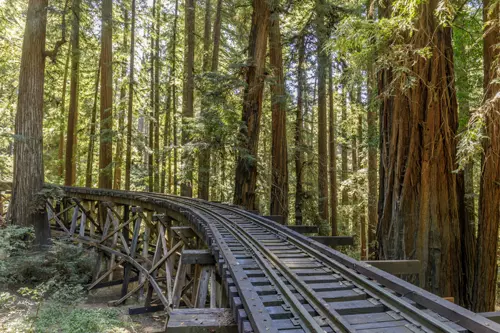
California public agencies and utilities routinely need rights across railroad corridors to construct water and sewer pipelines, electric transmission and distribution facilities, drainage improvements, roads, and other infrastructure.
Railroads routinely resist granting any permanent easement rights and typically limit crossings to revocable licenses that can be terminated. This presents a dilemma for public infrastructure projects, and eminent domain may seem like the next step. But railroads enjoy certain federal protections that can sometimes overcome state condemnation authority.
A new Surface Transportation Board (STB) policy statement underscores the need to evaluate federal preemption early—before finalizing the alignment, drafting the easement, or adopting a resolution of necessity.
On November 9, 2026, the STB’s Policy Statement on Jurisdiction and Preemption Under the ICC Termination Act, Docket No. EP 791, became final. Published at 91 Fed. Reg. 70956 (Nov. 9, 2026), the statement consolidates precedent and signals closer scrutiny of government actions that impact or burden rail service. While it is a nonbinding policy statement, its analysis has significant implications for infrastructure acquisition planning.
- Federal preemption can limit condemnation authority
The Interstate Commerce Commission Termination Act of 1995 (ICCTA) grants the STB exclusive jurisdiction over transportation by rail carriers. Federal preemption can therefore bar state and local actions—including condemnation actions—that prevent or unreasonably interfere with railroad transportation. Any exclusive easement or fee acquisition that would displace railroad use is categorically preempted. However, what about limited, non-exclusive easement crossings that can co-exist with railroad operations? The STB’s statement discusses stronger arguments for categorical preemption of exclusive takings of railroad rights-of-way, while recognizing that routine, non-exclusive crossings may require a fact-specific analysis. The Board expressly leaves individual outcomes open.
- A nonexclusive easement is not automatically safe
Courts have typically analyzed non-exclusive crossing disputes as requiring an as-applied inquiry into interference with railroad transportation. Ordinary non-exclusive road, wire, and sewer crossings may avoid preemption where they do not impede operations or create undue safety risks. However, a perpetual easement condemnation may be preempted where it would materially alter the railroad’s control of its right-of-way. For public agencies and utilities seeking to acquire easement rights in a railroad corridor, the practical question is not merely whether the instrument is called an easement: it is whether its location, duration, exclusivity, access rights, maintenance provisions, and construction obligations are compatible with present and reasonably anticipated railroad transportation.
- California law imposes its own requirements
California’s Eminent Domain Law independently regulates condemnation of property already devoted to a public use. Code of Civil Procedure section 1240.510 permits acquisition for a compatible joint use if the proposed use will not unreasonably interfere with or impair the existing or reasonably anticipated public use. The complaint—and resolution of necessity, when required—must specifically invoke that provision. Where the proposed acquisition would displace an existing public use, section 1240.610 applies the “more necessary public use” framework. Section 1240.630 addresses circumstances in which the existing user may continue its use following such a taking. These state-law provisions cannot override ICCTA preemption; a condemnor must satisfy both applicable California requirements and federal law.
A particularly instructive California decision is SFPP, L.P. v. Burlington Northern & Santa Fe Railway Co., 121 Cal.App.4th 452 (2004). A pipeline operator sought to condemn an easement within a railroad right-of-way. The court denied the condemnation action under California’s public necessity requirements based on evidence that the proposed pipeline location conflicted with a planned second track, maintenance needs, and safe railroad operations.
California Public Utilities Code sections 1201 and 1202 add another layer for crossings subject to California Public Utilities Commission jurisdiction. Securing a property right and obtaining necessary crossing authorization are separate issues.
- What should public agencies and utilities do if they need to install improvements within a railroad corridor?
- Investigate the railroad’s interest and operations. Obtain title documents, maps, licenses, track diagrams, and information about current operations. Determine whether the corridor is active, inactive, or subject to a formal federal abandonment process. Mere non-use does not necessarily establish abandonment.
- Design for co-existence. Evaluate alternatives that avoid railroad property, then favor a narrowly defined, non-exclusive crossing or easement where feasible. Avoid unnecessarily broad rights to exclude the railroad, occupy surface areas, restrict track relocation, or prevent future rail expansion.
- Build the engineering record before litigation. Document horizontal and vertical clearances, construction methods, access, maintenance, and reasonably foreseeable future track improvements. Have qualified engineers address asserted conflicts directly. The record may determine whether the taking is defensible.
- Negotiate the full operating agreement, not just compensation. Railroad agreements often address flagging, work windows, insurance, indemnity, inspection, relocation, maintenance, and restoration. Agencies should evaluate the cost and scheduling effects of these provisions against the risks of a preemption challenge. An easement can preserve durable property rights while an accompanying agreement governs construction and operations.
- Coordinate the state-law and federal analyses. Before adopting a resolution of necessity, determine the condemnor’s statutory authority, the applicable provisions of Code of Civil Procedure sections 1240.510 or 1240.610, and the evidence supporting project necessity and location. Separately assess ICCTA preemption and any CPUC crossing approval.
- Consider early STB guidance for high-risk disputes. If a railroad claims that a proposed taking would displace rail transportation or compromise safety, counsel should consider whether an STB declaratory order or other appropriate federal process could clarify jurisdiction before substantial condemnation expenses are incurred. The proper forum and sequencing will depend on the dispute.
- The takeaway
The STB’s November 9 policy statement strengthens the warning against treating railroad property like ordinary right-of-way. It does not establish that every railroad crossing or utility easement is prohibited. Instead, it reinforces a distinction with major practical consequences: an exclusive taking that displaces railroad use is substantially more vulnerable than a carefully engineered, non-exclusive easement that allows rail operations to continue.
For California agencies and utilities, the best strategy is to investigate railroad use early, select the least disruptive feasible property interest, develop an operationally credible engineering record, and evaluate state condemnation law and federal preemption together. Those steps can improve negotiations—and preserve options if condemnation ultimately becomes necessary.

 Partner
Brad Kuhn is a California real estate lawyer whose practice focuses on complex real estate disputes, eminent domain, inverse condemnation, land use and major infrastructure and development projects. He represents public ...
Eminent Domain Report is a one-stop resource for everything new and noteworthy in eminent domain. We cover all aspects of eminent domain, including condemnation, inverse condemnation and regulatory takings. We also keep track of current cases, project announcements, budget issues, legislative reform efforts and report on all major eminent domain conferences and seminars in the United States.
Stay Connected
 RSS Feed
Categories
- Administration
- Appraisal
- Arizona
- California
- California
- CLIMATE CHANGE
- CONGRESS
- Construction
- Court Decisions
- Energy & Utilities
- Environmental Law
- EPA
- Events
- FAQs
- Goodwill
- GOVERNMENT ADMINISTRATION
- Inverse Condemnation & Regulatory Takings
- Land Use Planning
- Lawsuit
- Legal Developments
- Nevada
- New Legislation
- Policy Shifts
- Possession
- Projects
- Public Agency Law
- Public Agency Law
- Public Policy
- Publications
- Real Estate and Property Rights
- Redevelopment
- Regulatory Reform and Proposed Rules
- Right to Take
- Right-of-Way
- Risk Management
- Seminars
- Speaking Engagements and Presentations
- Texas
- trial
- Utility Regulation
- Valuation
- Videos
- Washington State
- Water
- Water Law
- Wildfire Management
