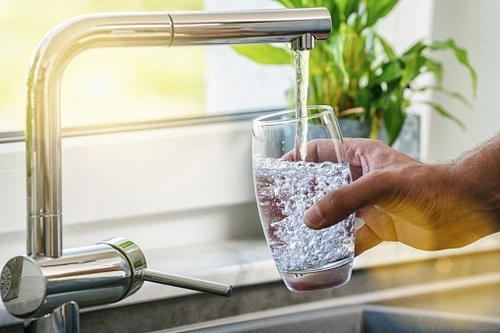
Courts have historically denied inverse condemnation claims by property owners against water suppliers where the quality of water or chemicals used allegedly caused corrosion or damage to water pipes. However, under a recent line of cases, that bar to recovery may be shifting. In a new unpublished decision, Micheli v. City of Fresno (2026 Cal. App. Unpub. LEXIS 1027), the Court permitted a large-scale, class action inverse condemnation lawsuit to proceed where homeowners claimed the City’s water supply corroded their pipes and caused health-related concerns.
Background Cases on Water Supply Inverse Condemnation Liability
In Williams v. Moulton Niguel Water Dist. (2018) 22 Cal.App.5th 1198, homeowners sued their water district for chloramine corroding their copper pipes. The court rejected the owners’ inverse condemnation lawsuit because (i) all customers received water containing the same chemical (i.e., the burden or cost of repair was already being shouldered by the public) and (ii) the homeowners “invited” the water into their property.
More recently we reported on the Shehyn v. Ventura County Pub. Works Agency case, where a court allowed a property owner to pursue an inverse condemnation claim when the owner received a disproportionate amount of damage compared to other customers.
Shehyn was a one-off property owner case, and so its applicability to large-scale water supply inverse condemnation liability was questionable. As discussed below, Micheli v. City of Fresno (2026 Cal. App. Unpub. LEXIS 1027), while unpublished, provides an example of the Court opening the door to large-scale, class action inverse condemnation lawsuits against water suppliers.
Micheli Decision
In Micheli, the City was running low on groundwater reserves to supply water to its constituents, and therefore constructed a water treatment facility to treat surface water (e.g., water obtained from lakes, reservoirs, rivers or canals) for use as drinking water. Thousands of property owners located in the northeast portion of the City who were supplied water from the treatment facility claimed that the water caused their galvanized iron plumbing to corrode to the point of requiring replacement and to leach harmful contaminants into their drinking water, resulting in recurring discolored water episodes and causing them health-related concerns. The owners claimed that it was the addition of treated surface water into the distribution system that caused the damage.
The City moved to dismiss the lawsuit as to the inverse condemnation cause of action, and the trial court agreed, finding that the property owners failed to allege any facts showing how their homes were “singled out” for special harm by the City’s use of surface water, and that the plaintiffs “invited the water into their homes.”
The Court of Appeal overturned the trial court’s dismissal, concluding that the property owners had contended that they were, in fact, “singled out” to bear the brunt of the harm caused by the water treatment facility since the City only delivered this type of water to the northeast residents, to the exclusion of other City water customers, and any burden should be borne by all water customers as a whole. The Court further held that the property owners did not consent to water that was improperly treated, and the “mere turning on of one’s tap water” should not preclude an inverse condemnation claim since property owners have no realistic alternative to receive water.
The Court did note that one of the allegations in the complaint could potentially bar an inverse condemnation claim. Specifically, plaintiffs pled tort causes of action in the alternative (nuisance and negligence) and alleged that the City failed to operate the water treatment facility with state-mandated corrosion control treatment and failed to control the pH levels of its water. The Court explained that such an allegation would fall within the negligent operation of a public improvement, as opposed to dangers inherent in the construction of the public improvement. In other words, where the damage results from routine operation, and not from a policy decision, there is no taking.
In this case, any damages resulting from the City’s alleged failure to adhere to corrosion control techniques mandated by its water supply permit would not be the result of the design, construction or maintenance of the treatment facility as conceived, but, rather, would be the result of deviating from the design of the facility. Nevertheless, because plaintiffs can plead inconsistent theories, the Court overturned the trial court’s ruling and allowed the property owners to continue pursuing the inverse condemnation cause of action.
Take-Aways
Micheli, while unpublished, may be the first court decision allowing thousands of residents to be considered “singled out” for purposes of an inverse condemnation claim. It also bucks the historical court notion of owners “inviting” water into their property which prevented inverse condemnation liability.
On the other hand, Micheli also provides helpful guidance on minimizing or eliminating inverse condemnation liability for negligent acts or omissions, such as failing to comply with state mandates or regulations, or damages that are not directly tied to the design, construction or maintenance of the public improvement.

 Partner
Brad Kuhn is a California real estate lawyer whose practice focuses on complex real estate disputes, eminent domain, inverse condemnation, land use and major infrastructure and development projects. He represents public ...
Eminent Domain Report is a one-stop resource for everything new and noteworthy in eminent domain. We cover all aspects of eminent domain, including condemnation, inverse condemnation and regulatory takings. We also keep track of current cases, project announcements, budget issues, legislative reform efforts and report on all major eminent domain conferences and seminars in the United States.
Stay Connected
 RSS Feed
Categories
- Administration
- Appraisal
- Arizona
- California
- CLIMATE CHANGE
- CONGRESS
- Construction
- Court Decisions
- Energy & Utilities
- Environmental Law
- EPA
- Events
- FAQs
- Goodwill
- GOVERNMENT ADMINISTRATION
- Inverse Condemnation & Regulatory Takings
- Land Use Planning
- Lawsuit
- Legal Developments
- Nevada
- New Legislation
- Policy Shifts
- Possession
- Projects
- Public Agency Law
- Public Agency Law
- Public Policy
- Publications
- Real Estate and Property Rights
- Redevelopment
- Regulatory Reform and Proposed Rules
- Right to Take
- Right-of-Way
- Risk Management
- Seminars
- Speaking Engagements and Presentations
- Texas
- trial
- Utility Regulation
- Valuation
- Videos
- Washington State
- Water
- Water Law
- Wildfire Management
