
Two days ago, the Appraisal Foundation issued a memorandum to Appraisal Regulatory System Stakeholders that warned of the Appraisal Institute approaching members of Congress to sponsor legislation that would essentially dismantle the current national appraiser regulatory system. The Appraisal Foundation states that provisions being suggested by the Appraisal Institute include the elimination of the Appraisal Subcommittee and the removal or significant dilution of the Congressional authority of the Appraisal Foundation." It asserts that removing the existing federal element of the current appraiser regulatory system would cause a breakdown in the uniformity and consistency in valuation services, at a time when the marketplace is calling for more uniformity, not fragmentation.
According to the Appraisal Foundation, the Appraisal Institute seeks to dilute the importance of the Uniform Standards of Professional Appraisal Practice (USPAP) to allow for more competition among standard setters. The Appraisal Foundation further notes that this is contrary to the global effort underway to promote the convergence of valuation standards. The Appraisal Institute has undertaken similar efforts in California and Texas seeking to require compliance with USPAP only when there is a federally-related transaction.
After reading the Appraisal Foundation’s memorandum, I tracked down California Assembly Bill 624. AB 624 provides that USPAP would constitute the minimum standard of conduct and performance for federally related real estate appraisal activity. As for non-federally-related appraisals, a state-licensed appraiser must use a nationally or internationally recognized valuation standard addressing the credibility of an appraisal or an appraisal review.
USPAP has been used in California for the past 25 years. AB 624’s stated purpose is to modernize California’s appraiser licensing law to permit licensed or certified appraisers to apply the most relevant appraisal standards for their assignments. It has been promoted as a means of enabling appraisers to take appraisal assignments in California that involve international standards or don’t require USPAP-compliant appraisals for non-federally related transactions. Speaking from the perspective of a legal advocate, it isn’t difficult to envision a parade of horribles that might result should appraisers be permitted to identify obscure international standards for an appraisal assignment in order to drive value up or down for a litigant. In addition, what does federally related mean? In the context of eminent domain, it would very likely include a federal project. But what if it is a County project that has federal funding? To my knowledge, AB 624 has received little attention. It has already been approved by the Assembly and is now being considered by the State Senate. Stay tuned…

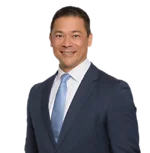 Managing Partner
David Graeler serves as Nossaman's managing partner and chair of the Firm’s Management Committee. He previously served as chair of the Litigation Department and co-led the Real Estate Group. David possesses more than 25 years of ...
Eminent Domain Report is a one-stop resource for everything new and noteworthy in eminent domain. We cover all aspects of eminent domain, including condemnation, inverse condemnation and regulatory takings. We also keep track of current cases, project announcements, budget issues, legislative reform efforts and report on all major eminent domain conferences and seminars in the United States.
Stay Connected
 RSS Feed
Categories
- Administration
- Appraisal
- Arizona
- California
- California
- CLIMATE CHANGE
- CONGRESS
- Construction
- Court Decisions
- Energy & Utilities
- Environmental Law
- EPA
- Events
- FAQs
- Goodwill
- GOVERNMENT ADMINISTRATION
- Inverse Condemnation & Regulatory Takings
- Land Use Planning
- Lawsuit
- Legal Developments
- Nevada
- New Legislation
- Policy Shifts
- Possession
- Projects
- Public Agency Law
- Public Agency Law
- Public Policy
- Publications
- Real Estate and Property Rights
- Redevelopment
- Regulatory Reform and Proposed Rules
- Right to Take
- Right-of-Way
- Risk Management
- Seminars
- Speaking Engagements and Presentations
- Texas
- trial
- Utility Regulation
- Valuation
- Videos
- Washington State
- Water
- Water Law
- Wildfire Management
