

California’s agricultural lands face constant pressure from residential, commercial, and industrial development. One of the state’s primary tools for preserving farmland and open space is the Williamson Act, formally known as the California Land Conservation Act of 1965. Unlike conservation easements, which are often permanent, Williamson Act contracts provide a mechanism for landowners to temporarily restrict development in exchange for favorable property tax treatment.
For landowners, public agencies, and eminent domain practitioners, understanding how these ...

Some of the biggest real estate disputes I’ve handled have started with a document that may be only a few paragraphs long: an easement. Easements are everywhere. Utilities use them for pipelines and transmission lines. Developers rely on them for access and infrastructure. Property owners inherit them when they buy property. And they’re often ignored—until somebody wants to do something the other side doesn’t like. And in eminent domain proceedings, public agencies and utilities oftentimes pay little attention to the easement terms or how broad or narrow they’ve ...

Understanding the acquisition and condemnation process is essential to the successful delivery of infrastructure and public projects. Whether you're new to the right of way profession or simply looking for a refresher, join us for our upcoming webinar, "An Introduction to the Right of Way Acquisition and Condemnation Process," on October 6, 2026.
In our work representing public agencies and other project stakeholders, we regularly see how important it is for project teams to have a clear understanding of the acquisition and condemnation process. While right of way acquisition ...

When people think about eminent domain disputes, they usually think about appraisers, lawyers, depositions and trials. But I’ve found that many times the greatest impact on the ultimate cost of a case happens long before anyone files a complaint. That is true for both sides. For public agencies and utilities, an early project or acquisition decision can unintentionally create a much larger compensation claim. For property owners and developers, failing to understand the impact of a proposed acquisition early can mean losing opportunities to protect the property or improve the ...

On September 8, 2026, we presented to IRWA Chapter 67 on "A Non-Attorney's Role in Condemnation," a program exploring the important contributions that project team members outside the legal department make to successful eminent domain proceedings.
The presentation emphasized that the most successful projects, those delivered on time and within budget, are achieved when all project stakeholders work collaboratively and maintain open lines of communication throughout the process. Early involvement by right of way professionals, project managers, engineers, appraisers ...

Public utilities rely on access to private and public land to build and maintain essential infrastructure. When voluntary acquisition efforts fall short, litigation becomes a necessary tool to secure those rights. Understanding the eminent domain litigation process enables utilities to navigate court procedures effectively, maintain project timelines, and manage risk while balancing the rights of property owners. This overview dives into what happens once litigation becomes necessary. …
Public utilities rely on access to private and public land to build and maintain essential infrastructure. Understanding the right-of-way and condemnation process enables utilities to secure land legally, avoid delays and maintain a balance between operational needs and property owners’ rights. Without a firm understanding of this basis, projects may be delayed, costs can quickly rise and risk exposure increases.
Any acquisition has two parts: (1) the pursuit of a negotiated acquisition through the pre-condemnation process and (2) the involuntary condemnation of the ...

It is spring. Flowers are blooming; the rivers swell with snowmelt from the mountains; newly thawed Northern ponds welcome the return of their ducks and geese; Florida convulses with an annual migration of revelers. It is only natural for the mind to turn to one of the two inevitabilities: Taxes.
Tax time
As the Ides of April approach for individual tax filers, a mad dash to find tax savings is underway. Many real estate investors and professionals are quite familiar with the tax saving potential of a 1031 Exchange. Named after a section number of the tax code at 26 U.S.C. § 1031—which ...

When one hears “eminent domain” or “condemnation,” you might envision a governmental agency or utility coming in and acquiring the entirety of a piece of property and leaving nothing behind. However, often times, condemnation does not require the entire property, but only a portion or rights to use a portion a specific way. So, what is the difference between the various terms of fee simple, an easement, full take, and part take? …

Join us in Riverside, CA on February 7th as we provide an overview of the eminent domain process, along with best practices for right-of-way acquisition, during the International Right of Way Association (IRWA) Chapter 57 Membership Luncheon. We’ll cover everything from identifying project alternatives to ultimately acquiring specific property.
We will provide an overview of the entire process and illustrate how all of the individual components work together. In particular, we’ll discuss how to effectively navigate the precondemnation process to position for the ...
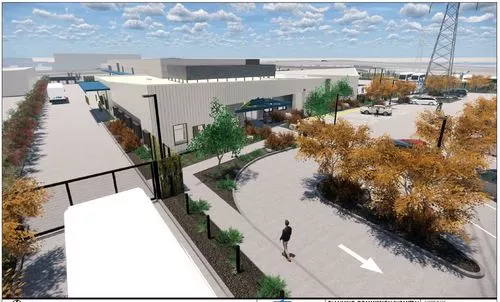
A recent article from Border Report, "Tijuana residents holding out for more money, slowing construction of border crossing," caught my attention. Not only because we're advising on the border crossing project on the U.S. side, but also because it raises an interesting valuation issue.
According to the article, property owners in eastern Tijuana, where the new port of entry is going to be built, are holding up the project by demanding more money for their land. Specifically, the owners want to be paid what the land will be worth once the border crossing is built instead of current value. These increased payment demands ...

Join us on November 16th from 1:00 to 2:00 p.m. PT as we discuss “Partial Acquisitions: Project Benefits and Mitigation Strategies Related to Offsetting Severance Damages.” We are excited to host this webinar along with our guest speakers, Alison Roach and Robert Caringella from Jones, Roach & Caringella, Inc.
During this webinar, we will provide:
- A legal primer on severance damages in partial acquisitions;
- An in-depth review of the legal standards granting condemning entities the ability to offset severance damages with project benefits; and
- An examination of case studies ...

For those of you who missed our recent webinar, "Living on the Edge: Managing Sea Level Rise in California", you can find a recording of the event posted on our website. My colleagues Ben Rubin and John Erskine provided a great overview of ways to protect existing infrastructure and private property through coastal resiliency, what the models and data are suggesting on the future of sea level rise and the status of pending sea level rise legislation in California. I covered risks and possible solutions for public agencies and property owners, with a focus on how Coastal Commission and ...

When a public agency is acquiring private property for a public project, typically the key issue in dispute is how much the agency should pay -- what is “just compensation”? Determining the property’s value and any damages from the acquisition or public project is usually based on appraisals prepared for the public agency and property owner. A recent article written by Lauren Alexander, on behalf of the Owners' Counsel of America (a network of experienced eminent domain attorneys dedicated to defending the rights of private property owners across the US), highlights the top 10 ...
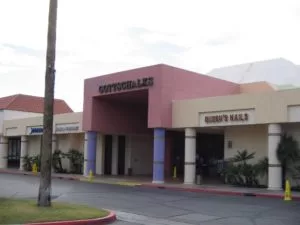
With the recent government mandates surrounding COVID-19, many businesses are completely shut down and are legally unable to open their doors to the public. Are those businesses -- movie theaters, gyms, retail stores, etc. -- entitled to compensation for a regulatory taking? Similarly, landlords are experiencing massive losses as those tenants are unable to make rental payments; are those losses compensable? Should governments worry about liability when issuing orders requiring the closure of businesses?
While compensation arguably should be paid from a decency and “good ...

COVID-19 has undoubtedly upended the world, including the way we do business and the future of our economy. We have received a number of questions and concerns from clients in the right of way industry on how the current pandemic affects the way we do business, and what to expect going forward. Please read on for links to helpful resources...
We are pleased to provide the next installment of our video series from Nossaman’s 2019 Eminent Domain Seminars. In this segment, Eminent Domain Partner Artin Shaverdian discusses best practices when abandoning take areas and narrowing project scope.
For years, we've been working with our public agency clients during the environmental and design-phase to minimize right-of-way impacts with new infrastructure projects. Yet for many agencies, property acquisitions are an afterthought, as the costs of construction and environmental impacts headline agencies' concerns. That thought process is slowly beginning to change, as agencies are starting to recognize that right-of-way acquisition can significantly delay projects, resulting in construction delay claims, change orders, loss of project funding, and in ...
Eminent Domain Report is a one-stop resource for everything new and noteworthy in eminent domain. We cover all aspects of eminent domain, including condemnation, inverse condemnation and regulatory takings. We also keep track of current cases, project announcements, budget issues, legislative reform efforts and report on all major eminent domain conferences and seminars in the United States.
Stay Connected
 RSS Feed
Categories
- Administration
- Appraisal
- Arizona
- California
- California
- CLIMATE CHANGE
- CONGRESS
- Construction
- Court Decisions
- Energy & Utilities
- Environmental Law
- EPA
- Events
- FAQs
- Goodwill
- GOVERNMENT ADMINISTRATION
- Inverse Condemnation & Regulatory Takings
- Land Use Planning
- Lawsuit
- Legal Developments
- Nevada
- New Legislation
- Policy Shifts
- Possession
- Projects
- Public Agency Law
- Public Agency Law
- Public Policy
- Publications
- Real Estate and Property Rights
- Redevelopment
- Regulatory Reform and Proposed Rules
- Right to Take
- Right-of-Way
- Risk Management
- Seminars
- Speaking Engagements and Presentations
- Texas
- trial
- Utility Regulation
- Valuation
- Videos
- Washington State
- Water
- Water Law
- Wildfire Management
