

Major infrastructure projects have complicated schedules. Design, environmental review, funding, permitting, utilities and construction all must line up. But one item tends to always get squeezed at the end of the project schedule: acquiring the property rights the project needs. That can be an expensive mistake.
Right-of-way acquisition takes time. Before an agency or utility can obtain possession, it may need to identify the precise property interest required, review title, complete an appraisal, make an offer, negotiate with the owner and, if negotiations are ...


California’s agricultural lands face constant pressure from residential, commercial, and industrial development. One of the state’s primary tools for preserving farmland and open space is the Williamson Act, formally known as the California Land Conservation Act of 1965. Unlike conservation easements, which are often permanent, Williamson Act contracts provide a mechanism for landowners to temporarily restrict development in exchange for favorable property tax treatment.
For landowners, public agencies, and eminent domain practitioners, understanding how these ...

Understanding the acquisition and condemnation process is essential to the successful delivery of infrastructure and public projects. Whether you're new to the right of way profession or simply looking for a refresher, join us for our upcoming webinar, "An Introduction to the Right of Way Acquisition and Condemnation Process," on October 6, 2026.
In our work representing public agencies and other project stakeholders, we regularly see how important it is for project teams to have a clear understanding of the acquisition and condemnation process. While right of way acquisition ...

Most eminent domain lawyers tend to develop their practices on one side of the aisle. Some primarily represent public agencies and utilities acquiring property. Others primarily represent property owners and businesses facing condemnation. My practice has developed differently. For more than two decades, I have regularly represented both. I have represented public agencies and utilities acquiring property for major infrastructure projects, and I have represented property owners and businesses seeking just compensation when their property is taken or affected by those ...

On September 8, 2026, we presented to IRWA Chapter 67 on "A Non-Attorney's Role in Condemnation," a program exploring the important contributions that project team members outside the legal department make to successful eminent domain proceedings.
The presentation emphasized that the most successful projects, those delivered on time and within budget, are achieved when all project stakeholders work collaboratively and maintain open lines of communication throughout the process. Early involvement by right of way professionals, project managers, engineers, appraisers ...

For several years, we’ve been reporting on and tracking several pending eminent domain matters involving public agencies attempting to take-over and operate public utilities (referred to as “municipalization”). When two different California Courts of Appeal issued conflicting decisions on the standard of review that should be applied in such take-overs, the California Supreme Court finally decided to chime in. On August 24, 2026, the Supreme Court in Town of Apple Valley v. Apple Valley Ranchos Water issued its decision and came down unequivocally in favor of ...

When public agencies acquire property for future public projects, many times they are only focused on negotiating the acquisition price with the property owner. If an acquisition price can be agreed upon voluntarily, eminent domain can be avoided. But focusing solely on negotiations with the property owner can lead to surprises and exposure on total compensation that may be due to other parties. A recent article in the Riverside Record, RUSD Agrees To Pay Nearly $1M To Relocate Cellphone Tower, serves as an important reminder for agencies that they must carefully review title ...

Under Arizona’s Constitution, as under its federal counterpart, a condemning authority may acquire private property if the use to which the acquired property will be put is a proper public use. From the outset of any contemplated acquisition, it is imperative that a governmental entity determine that the purpose for the acquisition will constitute a public use. This article summarizes some of the law governing public use.
A judge must determine that a proposed use is “really public” once an eminent domain action is filed. Ariz. Const. Art. 2, §17; A.R.S. § 12-1132(A). Though ...
During the past several years, we’ve been following an eminent domain case playing out in Mendocino County related to the Skunk Train. In 2023, the court concluded that the Skunk Train operator, Mendocino Railway, did not have the right to take property because it was not proposing to put the property to a public use. In a recent unpublished opinion, the Court of Appeal revisited this conclusion, and addressed whether a railroad corporation qualified as a public utility with the authority to exercise eminent domain, and what evidentiary showing is required to establish public use ...
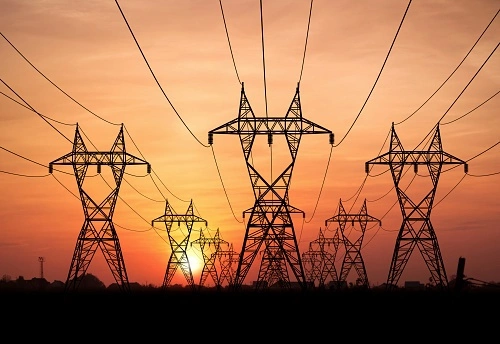
Public utilities rely on access to private and public land to build and maintain essential infrastructure. Understanding the right-of-way and condemnation process enables utilities to secure land legally, avoid delays and maintain a balance between operational needs and property owners’ rights. Without a firm understanding of this basis, projects may be delayed, costs can quickly rise and risk exposure increases.
Any acquisition has two parts: (1) the pursuit of a negotiated acquisition through the pre-condemnation process and (2) the involuntary condemnation of the ...

A question that arises with some frequency in our practice is whether a public entity can adversely possess a property interest against another public entity. The general rule of thumb is that a private entity cannot obtain an interest in real property owned by a public entity through adverse possession. This rule is in part based off of the long-established principle nullum tempus occurrit regi, which means "time does not run against the king."
In California, this common law principle has been affirmed and reaffirmed for over a century in our courts and has been codified by the ...

A recent article from Border Report, "Tijuana residents holding out for more money, slowing construction of border crossing," caught my attention. Not only because we're advising on the border crossing project on the U.S. side, but also because it raises an interesting valuation issue.
According to the article, property owners in eastern Tijuana, where the new port of entry is going to be built, are holding up the project by demanding more money for their land. Specifically, the owners want to be paid what the land will be worth once the border crossing is built instead of current value. These increased payment demands ...

Join us on November 16th from 1:00 to 2:00 p.m. PT as we discuss “Partial Acquisitions: Project Benefits and Mitigation Strategies Related to Offsetting Severance Damages.” We are excited to host this webinar along with our guest speakers, Alison Roach and Robert Caringella from Jones, Roach & Caringella, Inc.
During this webinar, we will provide:
- A legal primer on severance damages in partial acquisitions;
- An in-depth review of the legal standards granting condemning entities the ability to offset severance damages with project benefits; and
- An examination of case studies ...

In the City of Fresno, the Tower Theatre is a bohemian landmark, opened in 1929 as a 20th Century Fox Movie House. This year, it became public that Adventure Church was buying the theatre, which has caused tensions to rise in the community, with thousands signing a petition to save the historic theatre, weeks of demonstrations trying to prevent its use as a church, and even a pending lawsuit. The City attempted to defuse the situation by offering Adventure Church an alternative location, which also backfired. So what’s next? The City may be considering using eminent domain to prevent ...

For those of you who missed our recent webinar, "Living on the Edge: Managing Sea Level Rise in California", you can find a recording of the event posted on our website. My colleagues Ben Rubin and John Erskine provided a great overview of ways to protect existing infrastructure and private property through coastal resiliency, what the models and data are suggesting on the future of sea level rise and the status of pending sea level rise legislation in California. I covered risks and possible solutions for public agencies and property owners, with a focus on how Coastal Commission and ...

Sometimes a public agency ends up abandoning an eminent domain proceeding, even after the property owner or business has moved from the property. Under Code of Civil Procedure, section 1268.620, if a defendant “moves from property” and the agency subsequently dismisses the suit, the owner/business may be able to recover payment of all damages proximately caused by the proceeding and its dismissal. One would think determining whether an owner/occupant has “moved” from the property would not be an issue for dispute. But a recent unpublished California Court of Appeal ...
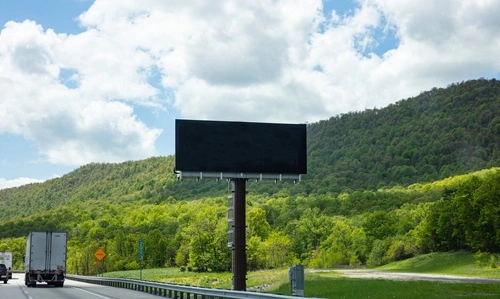
When a public agency seeks to acquire property by eminent domain, the agency’s appraiser sometimes forgets to account for unique value attributes of the property. For example, the valuation may fail to take into account income the property generates from a billboard or a cell tower. According to an article on KCRA News, 'I think they are a bunch of thieves': Auburn couple decries Caltrans' eminent domain move, this situation is currently playing out in Northern California. …

On April 1, Nossaman’s Eminent Domain Group hosted a webinar to discuss the impacts COVID-19 is having on the Right of Way industry. First, I’d like to thank the people who attended, many of whom added thoughtful questions to the discussion. It’s clear a lot of people are giving these issues a lot of thought. Second, obviously things continue to evolve at a breathtaking pace, and even by the time this post goes from being drafted to appearing on the blog, things are likely to change.
Note that this post is not meant to recap the things we discussed at the webinar. If you weren’t able to join us and want to review what we covered, feel free to download the COVID-19 PowerPoint we used, or watch the entire recorded webinar. No, the purpose of this post is to provide some insights as to what other right of way professionals are thinking about a few of these issues. During the webinar, we asked several poll questions, and since the Nossaman team found the results interesting, I’m hoping some of you will as well ...
We are pleased to provide the next installment of our video series from Nossaman’s 2019 Eminent Domain Seminars. In this segment, Eminent Domain & Valuation Partner Bernadette Duran-Brown discusses the first day of trial, the trial process and components, and some of the unique aspects of an eminent domain trial proceeding.
We welcome you to join our Partners at several upcoming presentations on eminent domain topics taking place near and far.
First, Nossaman's Eminent Domain & Valuation Practice Group Chair Brad Kuhn will be presenting during Nossaman's 2019 Land Use Seminar on May 21st, in Costa Mesa, CA. Brad will be part of a discussion concerning the very timely topics of Managed Retreat and Sea Level Rise. This is an area of great interest for both private landowners, cites and towns, and public agencies alike, and the presentation will provide an overview of the current proposals and ...
Welcome to the first installment of our video series from Nossaman’s 2019 Eminent Domain Seminars. In this segment, Nossaman Partner Rick Rayl discusses the initial appraisal process and benefits of a strong appraisal.
The City of Menlo Park is proceeding with two transportation projects. The first one, an undercrossing to separate bicycles and pedestrians from rail traffic at Middle Avenue, received the green light from the City Council on December 15. The City has committed $210,000 and has authorized staff to apply for an additional $490,000 in San Mateo County Measure A sales tax funds to pay for preliminary engineering work on the project. The City estimates that the design and construction of the undercrossing will cost approximately $11 million.
The City’s second project is the Ravenswood ...
Eminent Domain Report is a one-stop resource for everything new and noteworthy in eminent domain. We cover all aspects of eminent domain, including condemnation, inverse condemnation and regulatory takings. We also keep track of current cases, project announcements, budget issues, legislative reform efforts and report on all major eminent domain conferences and seminars in the United States.
Stay Connected
 RSS Feed
Categories
- Administration
- Appraisal
- Arizona
- California
- California
- CLIMATE CHANGE
- CONGRESS
- Construction
- Court Decisions
- Energy & Utilities
- Environmental Law
- EPA
- Events
- FAQs
- Goodwill
- GOVERNMENT ADMINISTRATION
- Inverse Condemnation & Regulatory Takings
- Land Use Planning
- Lawsuit
- Legal Developments
- Nevada
- New Legislation
- Policy Shifts
- Possession
- Projects
- Public Agency Law
- Public Agency Law
- Public Policy
- Publications
- Real Estate and Property Rights
- Redevelopment
- Regulatory Reform and Proposed Rules
- Right to Take
- Right-of-Way
- Risk Management
- Seminars
- Speaking Engagements and Presentations
- Texas
- trial
- Utility Regulation
- Valuation
- Videos
- Washington State
- Water
- Water Law
- Wildfire Management
